
Service 05 · Refurbishment and construction
Rope access and work at height
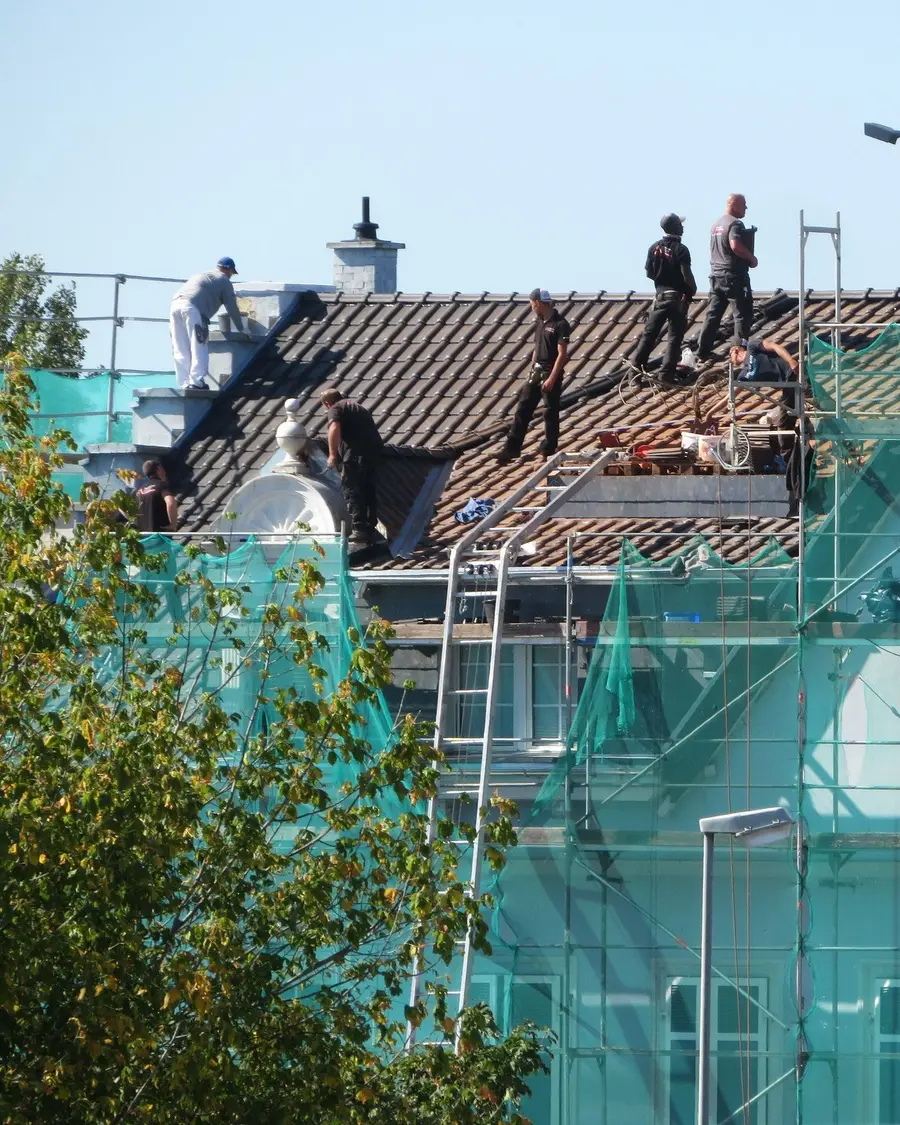
We work on façades, roofs, courtyards and industrial facilities where conventional means cannot reach or are not worthwhile: with rope access techniques, aerial platforms or scaffolding, always with a prior safety plan.
What it includes
Inspection and diagnosis
Inspection of roofs, façades and courtyards with a photographic report to decide on the action.
One-off repairs
Making cornices safe, sealing, part replacement and small repairs without scaffolding.
Rope access
Rope access techniques for inner courtyards, party walls and façades with no room for scaffolding.
Lifelines and protection
Installation of lifelines, anchor points and collective protection on roofs.
Cleaning and maintenance
Gutters, downpipes, skylights and elements at height that need periodic inspection.
Installation and removal on roofs
Extraction units, skylights, signs and elements that need to be lifted, fixed or removed.
Support for industrial projects
Coordination of aerial platforms and lifting equipment for work in industrial buildings and facilities.
Rope access or scaffolding: when each option is best
Rope access is the most agile option for one-off jobs, light wells, party walls and façades with no room to erect scaffolding on the pavement. It requires less set-up time, less occupation of the public road and less access equipment, so it is usually more economical for specific interventions.
Scaffolding remains the best option for extensive, lengthy works, where several trades work at the same time across the whole façade. An aerial platform quickly deals with industrial buildings, accessible façades and short jobs. In the preliminary survey we explain what each means in terms of time, cost and disruption.
What we do at height
- Inspection and diagnosis of roofs, façades and courtyards, with photographs and a proposed course of action.
- One-off repairs: making cornices and cladding safe, sealing joints, replacing parts, small waterproofing jobs.
- Cleaning and maintenance of gutters, downpipes, skylights and grilles.
- Installation of lifelines, anchor points and collective protection that make future maintenance easier.
- Installation and removal of elements on roofs: extraction units, air-conditioning equipment, signs and rooflights.
- Support work for façade refurbishment, roof renewal and industrial projects.
Safety: planning, training and equipment
Every intervention at height starts with a risk assessment and a work plan: means of access, anchor points, protective equipment, signage and, when it affects the public road, the corresponding municipal permit. Rope access work is carried out by professionals with specific training and the appropriate protective equipment, with the anchors checked before each working day.
In industrial buildings and facilities we coordinate the intervention with the plant manager to work without interrupting the activity and with the health and safety documentation each workplace requires.
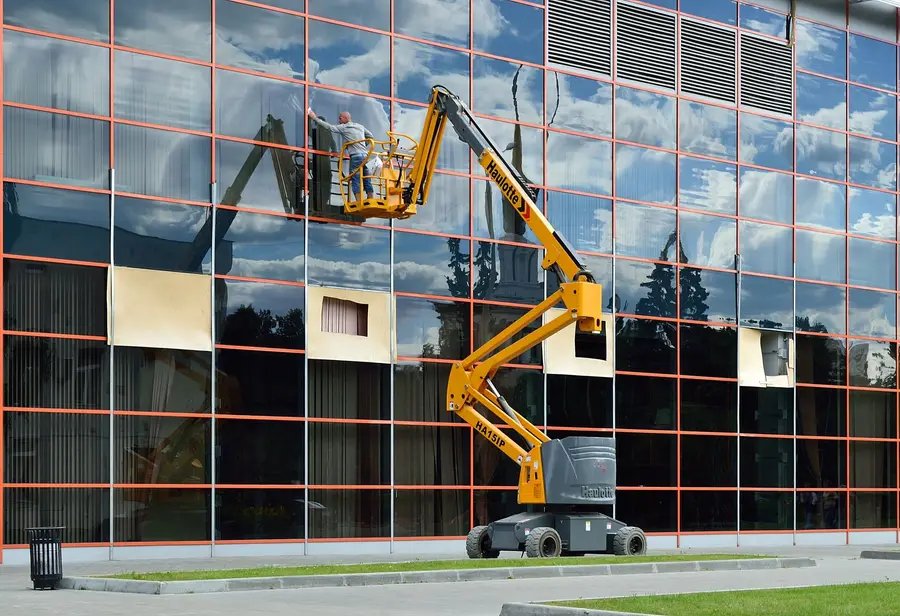
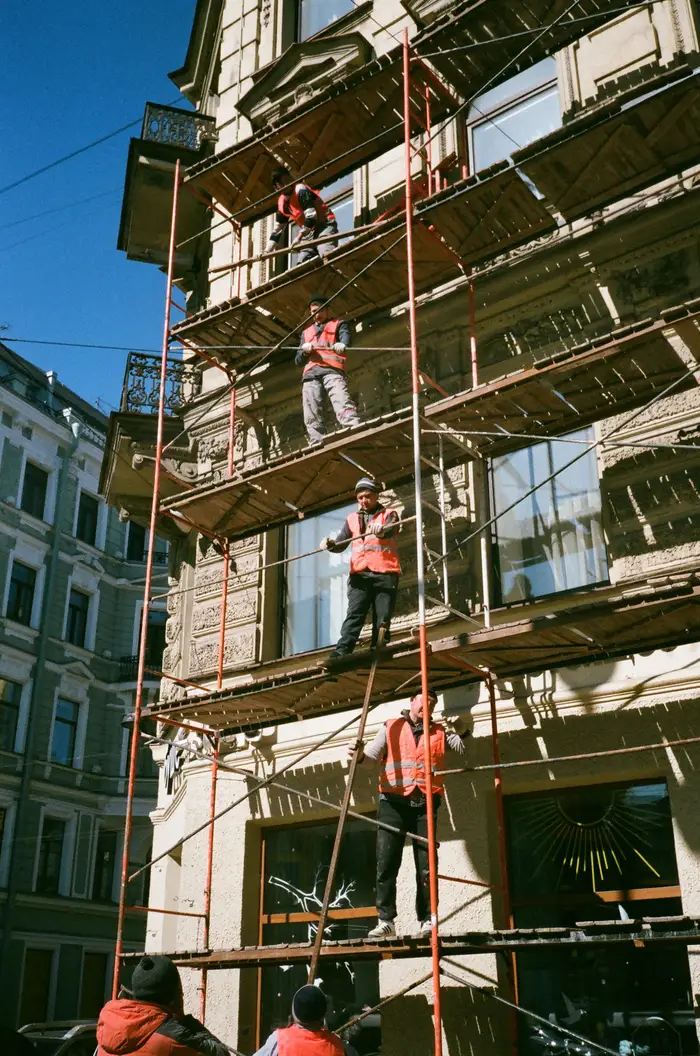
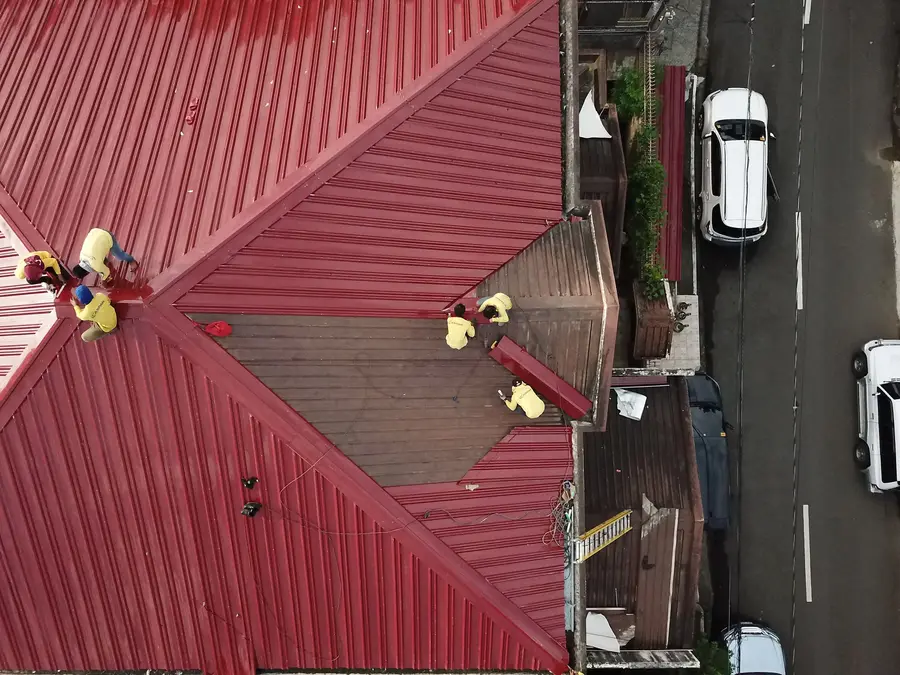
Illustrative images. They do not show Revital Innover projects.
Who we work for
- Homeowners' associations with inner courtyards, party walls and façades with no access for scaffolding.
- Property managers who need a quick diagnosis and a one-off repair.
- Industry: roofs of industrial buildings, silos, structures and equipment at height.
- Maintenance companies, engineering firms and developers that need an access-at-height team.
- Commercial and office buildings.
How we manage it
- Preliminary survey and assessment of each project, with a site visit when the job requires it.
- Technical proposal with the phases of execution, deadlines and every item explained.
- Coordination of the professionals, specialised companies and technical means involved.
- Follow-up of the execution and handover of the final documentation.
FAQ
What is the difference between rope access and work at height?
Work at height is any intervention with a risk of falling, whether from scaffolding, a platform or a roof. Rope access is a specific way of working at height: the operative gains access and positions themselves with ropes and harnesses, without scaffolding or a platform.
Can a façade be refurbished without scaffolding?
In many cases, yes. With rope access techniques, cornices are made safe, joints are sealed, parts are replaced and walls are painted or waterproofed. For full refurbishments involving several trades, scaffolding is usually worthwhile; we assess it case by case.
Is a permit needed for rope access work?
It depends on where the work takes place. When the job affects the public road or requires occupying the pavement, a municipal permit may be needed; we handle it as part of the project. In inner courtyards and on roofs, the authorisation of the owner or the association is normally enough.
What is a lifeline and when is it worth installing one?
It is a fixed fall-arrest system (a cable or rail with anchor points) to which the professional working on a roof is attached. Health and safety regulations require fall protection for work at height; a permanent lifeline makes future roof maintenance safer and cheaper.
Do you work in operating industrial buildings?
Yes. We plan the works with the plant manager, by zones and time slots, with the signage and health and safety documentation needed so as not to interrupt the activity.
More answers on the FAQ page.
Do you have a rope access or work at height project?
Tell us what you need and where the property is. We study it and propose the most suitable solution before preparing the quote.
Request a quote